United Way of Steele County
Communities That Care
Communities That Care (CTC) is a proven, community-wide approach to helping young people thrive. In Steele County, neighbors, schools, agencies, businesses, and local government are working from the same local data — and the same plan — to strengthen families, support students, and build a healthier, more resilient community.
● Now in Phase 3: Develop a Community ProfileWhat is Communities That Care?
CTC helps a community get ahead of problems instead of reacting to them. It uses local data to find the risk factors that most affect our young people — and the protective factors that help them succeed — then brings the whole community together around tested, effective strategies.
The framework was developed by researchers at the University of Washington and is used by communities across the country. Here in Steele County, the work is led by a Community Board and Key Leaders from across the county, coordinated by United Way of Steele County.
This work connects directly to three of United Way’s impact areas:
CTC in Steele County is about
- Listening to local data — and local voices
- Strengthening families and schools
- Reducing risks for youth before problems start
- Building on the strengths our community already has
Youth Opportunity
Helping every young person in Steele County stay connected to school, build strong relationships, and reach their full potential.
Healthy Community
Supporting the physical and mental well-being of children and families, and reducing the risks — including substance use — that can get in the way of a healthy life.
Community Resiliency
Building a stronger, more connected Steele County where families have support before a challenge becomes a crisis.
Where We Are: The Five Phases of CTC
CTC moves through five phases. Steele County has completed the first two and is now deep in Phase 3.
-
1
Get Ready
Assess our community’s readiness and bring key stakeholders to the table.
✓ Complete -
2
Get Organized
Form the Community Board, Key Leaders group, and workgroups that carry the work.
✓ Complete -
3
Develop a Community Profile
Collect and study local data, choose priority risk factors, and assess the resources already serving Steele County youth and families.
● We are here -
4
Create a Community Action Plan
Set goals and select tested, effective programs and strategies that address our priorities.
Up next -
5
Implement & Evaluate
Put the plan into action, track results, and adjust so the work keeps making a difference.
Future
Phase 3 in Focus: Our Community Assessment
Right now, our Risk and Protective Factors Workgroup is reviewing a draft Community Assessment built from Steele County data — including the Minnesota Student Survey, public health and school data, and local information from across the county.
What we are doing now
- Reviewing youth data across four areas: Community, Family, School, and Peers/Individual
- Identifying the 2–3 priority risk factors where Steele County can make the biggest difference
- Looking honestly at our strengths — the protective factors we can build on
- Preparing a resource assessment of programs and services already in place
What happens next
When the Community Board approves our priority risk factors, we move to Phase 4: building a Community Action Plan around tested, effective strategies matched to those priorities. No programs are chosen until the data work is done — that order is what makes CTC work.
Updates will be posted on this page as each step is completed.
Recommended Priorities Under Review
The draft assessment recommends the three priorities below. They are recommendations until the Risk and Protective Factors Workgroup and Community Board review and approve them.
Family Conflict & Family History
In Steele County, 42% of students report at least one adverse childhood experience (ACE), and 21% report two or more — experiences closely tied to family stress and conflict.
Lack of Commitment to School
Only 57% of Steele County students report a strong student identity — down from 72% in 2016 — and 11th graders trail the Minnesota average (about 43% vs. 52%).
Availability of Drugs
Youth substance use in Steele County runs above Minnesota averages at every grade level, and friends are the most common source of e-cigarettes for students who vape (54%).
Sources: Minnesota Student Survey and local data compiled in the draft Steele County CTC Community Assessment (October 2026).
Our Community Board
The Community Board is the engine of CTC in Steele County — volunteers representing schools, health care, business, government, faith and nonprofit organizations, media, parents, and youth-serving agencies. These are the members doing the hands-on work: serving on workgroups, reviewing the data, and building the plan.
- Zeinab AbdiCommunity Member
- Julie AndersonSteele County Transitional Housing
- Theodore BoosalisBeauterre Recovery Institute
- Ne’kaya CollinsCommunity Member
- Nura ElmiOwatonna Public Schools
- Qamar HersiCommunity Member
- Beth HortopExchange Club Center for Family Unity
- Holly JorgensenLet’s Smile
- Kory KathOwatonna Public Schools
- Paige KatelynStudent
- Khadra MuhidinCommunity Member
- Ethan RindfleischSteele County Public Health
- Melissa Rueckert DanielsonLincoln Square Apartments
- Grace ThurnauSt. Mary’s School
- Bruno VelaUnited Way of Steele County
Leadership

Josh Higgins
CTC Coordinator
Josh coordinates Steele County’s Communities That Care work day to day — supporting the Community Board and workgroups and keeping the assessment and planning process moving.
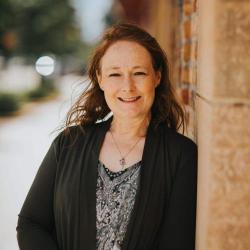
Annette Duncan
President, United Way of Steele County
Annette oversees the CTC grant at United Way of Steele County, which serves as the backbone organization for Communities That Care in Steele County.
Our Key Leaders
Key Leaders are senior leaders from across Steele County who champion this work in their organizations and in the community. We are grateful for their leadership.
- Julie AndersonSteele County Transitional Housing · Executive Director
- Madelin BruesselUnited Way of Steele County · Region 6 Prevention Coordinator
- Tamara ChampaOwatonna Public Schools · Superintendent
- Cheryl DeasonFederated Insurance · Director of Community Relations
- Amber FriesenAlliance for Greater Equity · Executive Director
- Renae FrySteele County · County Administrator
- Annie HarmanOwatonna People’s Press · Editor
- Sydney HobartAllina Health · Community Health Improvement
- Beth HortopExchange Club Center for Family Unity · Executive Director
- Dom KorbelCommunity Pathways of Steele County · Executive Director
- Nicole MeixnerSteele County Community Corrections · Administrative
- Alicyn PrestegardThe Lighthouse of Southern Minnesota · Operations Manager
- Julia SeykoraOwatonna Area Chamber of Commerce · Leadership Development & Outreach
- Chris StolachBlooming Prairie Public Schools · Superintendent
- Jenna TumaCity of Owatonna · City Administrator
- Lydia YahnkeOwatonna Adult Education · Adult Programs Coordinator
Latest Updates
Phase 3 is underway: Community Assessment in review
Our Risk and Protective Factors Workgroup is reviewing the draft Community Assessment and its recommended priority risk factors. The Community Board will consider the priorities for approval before we begin action planning.
Welcome, Josh Higgins — our new CTC Coordinator
Please join us in welcoming Josh Higgins as Steele County’s Communities That Care Coordinator. Josh will be working with our Community Board, Key Leaders, and workgroups throughout the CTC process.
Get Involved
CTC works because the whole community is at the table. If your organization works with youth or families in Steele County — or you would like to serve on a workgroup — we would love to hear from you.
United Way of Steele County · 245 SE 18th St., Ste. 1, Owatonna, MN 55060 · 507-455-1180
Communities That Care is an evidence-based prevention framework developed by the Social Development Research Group at the University of Washington. In Steele County, CTC is coordinated by United Way of Steele County.